5 Past Climate Change
Lecture videos5 videos · 28 min
Toy models
Chapter 5
Milankovitch Cycles
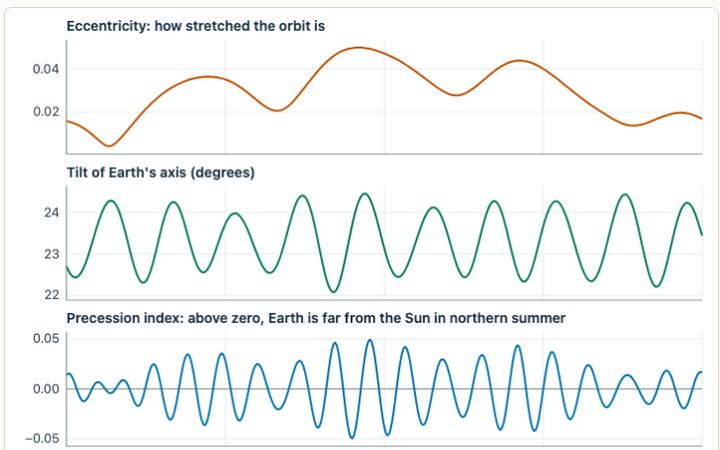
Earth's Orbit and Sunlight. Earth's orbit changes slowly as the other planets tug on it. The changes move Sunlight between seasons and latitudes, and they set the rhythm of the ice ages. Use the three views to see how.
Chapter 5
A Million Years of Ice Ages
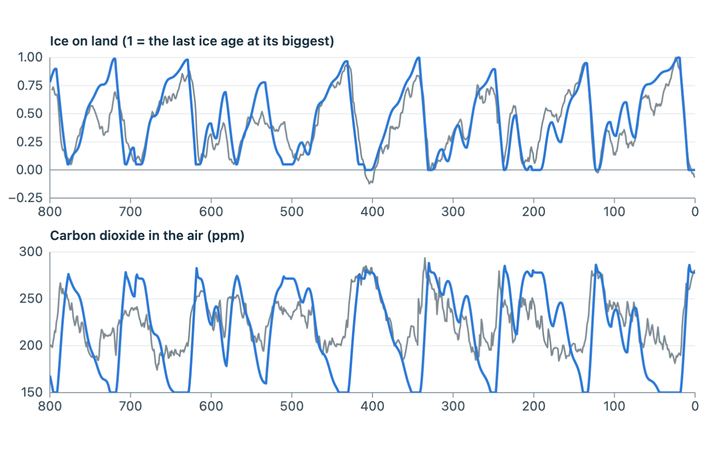
Sunlight, Ice and Carbon Dioxide. Earth's orbit sets the rhythm of the ice ages, but the ice and the carbon dioxide do the heavy lifting. Match a small model to the last 800,000 years, then add fossil carbon and see when the next ice age comes.
Chapter 5
Hothouses and Icehouses
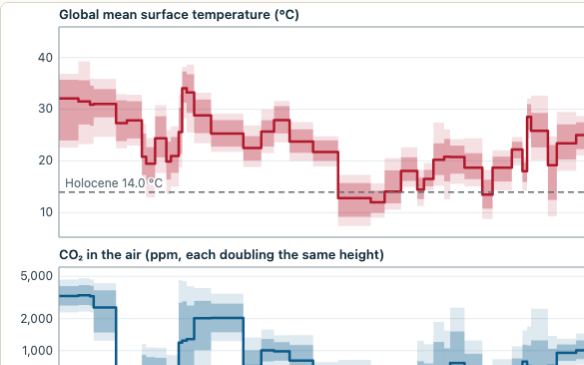
485 Million Years of CO₂ and Temperature. Global temperature and CO₂ over the last 485 million years, stage by stage, from the PhanDA reconstruction (Judd and others, 2024). Zoom and pan through deep time.
Exercises
- Exercise 5A: Sensitivity from deep timeAbout 30 minutes
- Exercise 5B: When is the next ice age?About 30 minutes