Models
Small climate models that run in your browser, each one written to go with a chapter of the book. Move a slider, change the air or the orbit, and watch what the planet does. Each model's About tab shows its equations and its code.
Simple: How it works
Part I · 6 models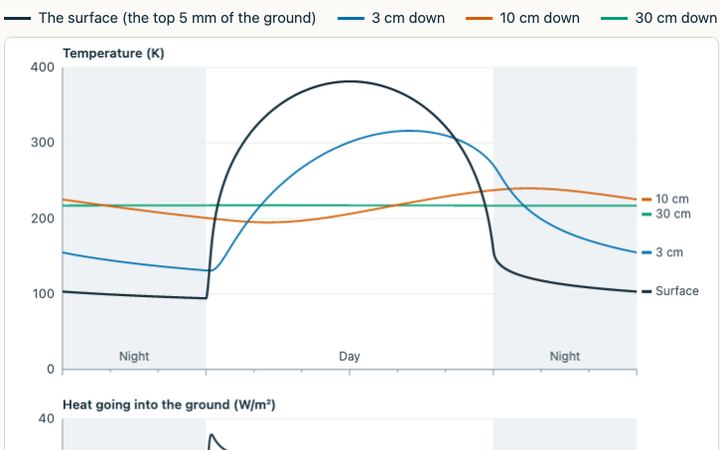
A Day on the Moon
Sunlight, Crushed Rock and No Air. The Moon has no air and no water, and its day lasts a month. Its surface is crushed rock that bakes at noon and is bitterly cold before sunrise. Change the length of the day and see what a world with no greenhouse effect does between noon and midnight.
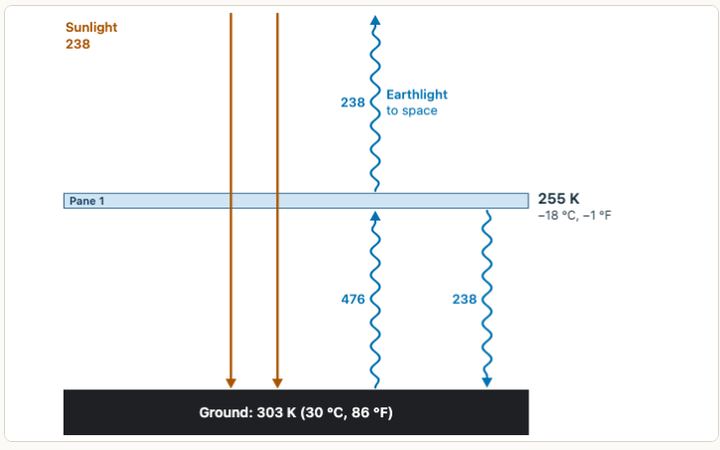
Panes of Glass
The Layer Model of the Greenhouse Effect. Clear panes let Sunlight through and absorb the Earthlight coming up from the ground. Each pane glows too, up and down. Stack more panes over the ground and see how warm it has to get to push the heat out.
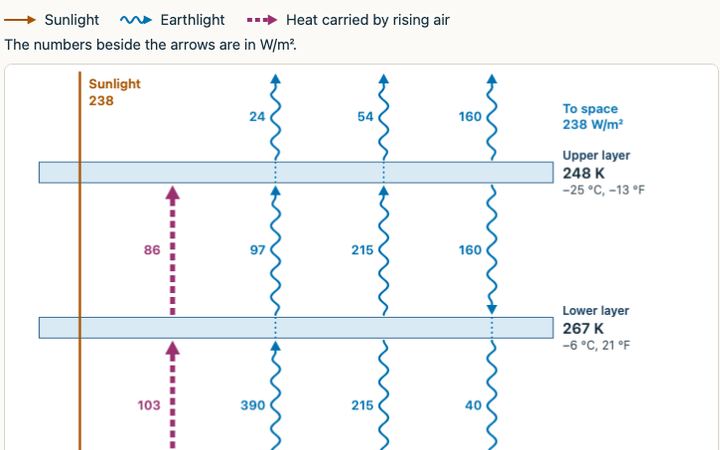
Leaky and Stirred
Two Layers of Air over Warm Ground. The real air isn't a perfect pane of glass. Some Earthlight leaks straight through it, and rising air carries heat up past it. Make two layers of air leak, stir them, and see what that does to the ground.
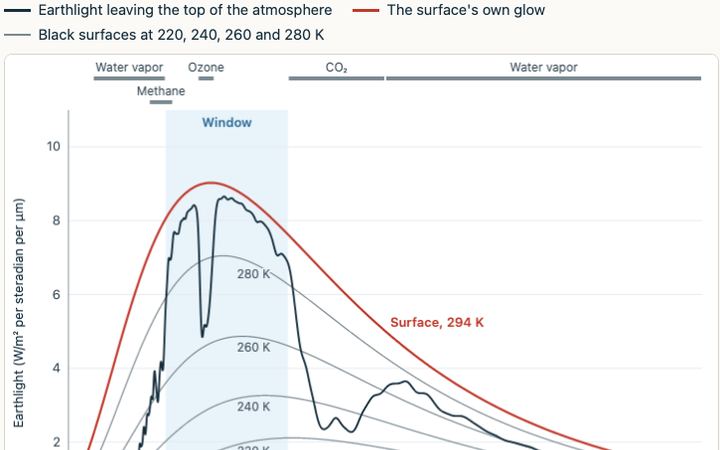
Earthlight Seen from Space
Greenhouse Gases and the Infrared Spectrum. The Earth and its air glow in the infrared. Greenhouse gases take bites out of that glow before it reaches space. Change the gases in a column of air and watch the spectrum a satellite would see.
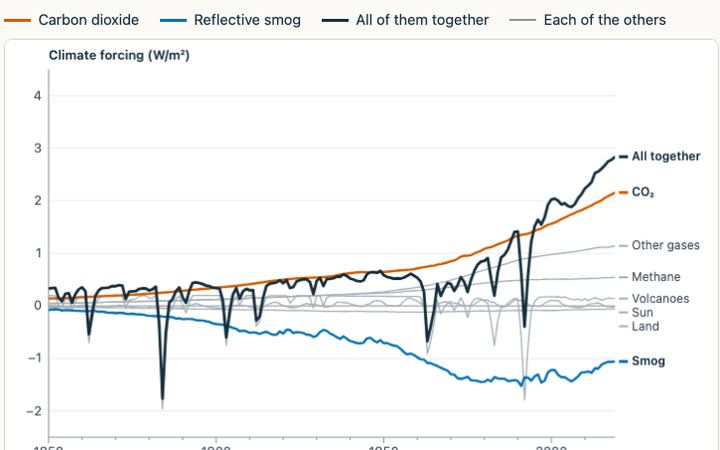
The Push and the Response
Forcing, Feedback and Warming. Something pushes the Earth's heat in and heat out apart. Feedbacks make the world's response to that push bigger, and the ocean makes it slow. Set the strength of each, and see how much the world has warmed and how much more it could.
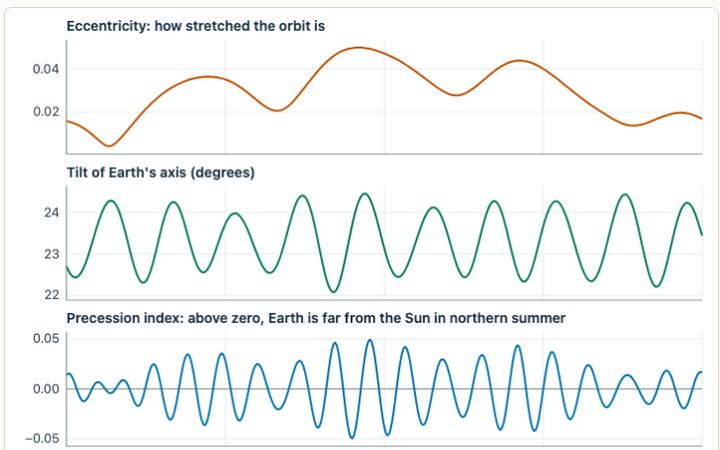
Milankovitch Cycles
Earth's Orbit and Sunlight. Earth's orbit changes slowly as the other planets tug on it. The changes move Sunlight between seasons and latitudes, and they set the rhythm of the ice ages. Use the three views to see how.
Serious: Why it's bad
Part II · 1 model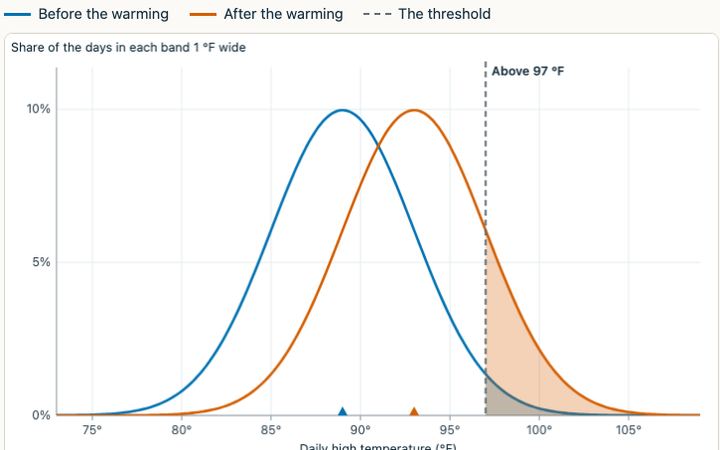
Solvable: What we can do
Part III · 1 model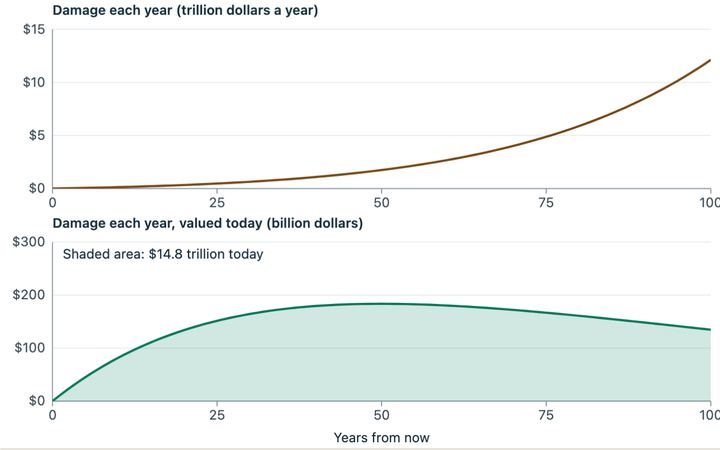
All the code is open. Every model is plain JavaScript that runs on your own computer, with nothing to install. The code is free to use and change under the MIT licence: github.com/airscottdenning/climate-models.
More models are on the way.